Pink vs platinum vs isabella vs lilac French Bulldog: what is the difference?
Pink, platinum, isabella and lilac are the four pale colours buyers mix up most often, and breeders do not always use the names the same way. The reliable way to tell them apart is the DNA report. This guide shows what to look for.

Updated · 5 min read
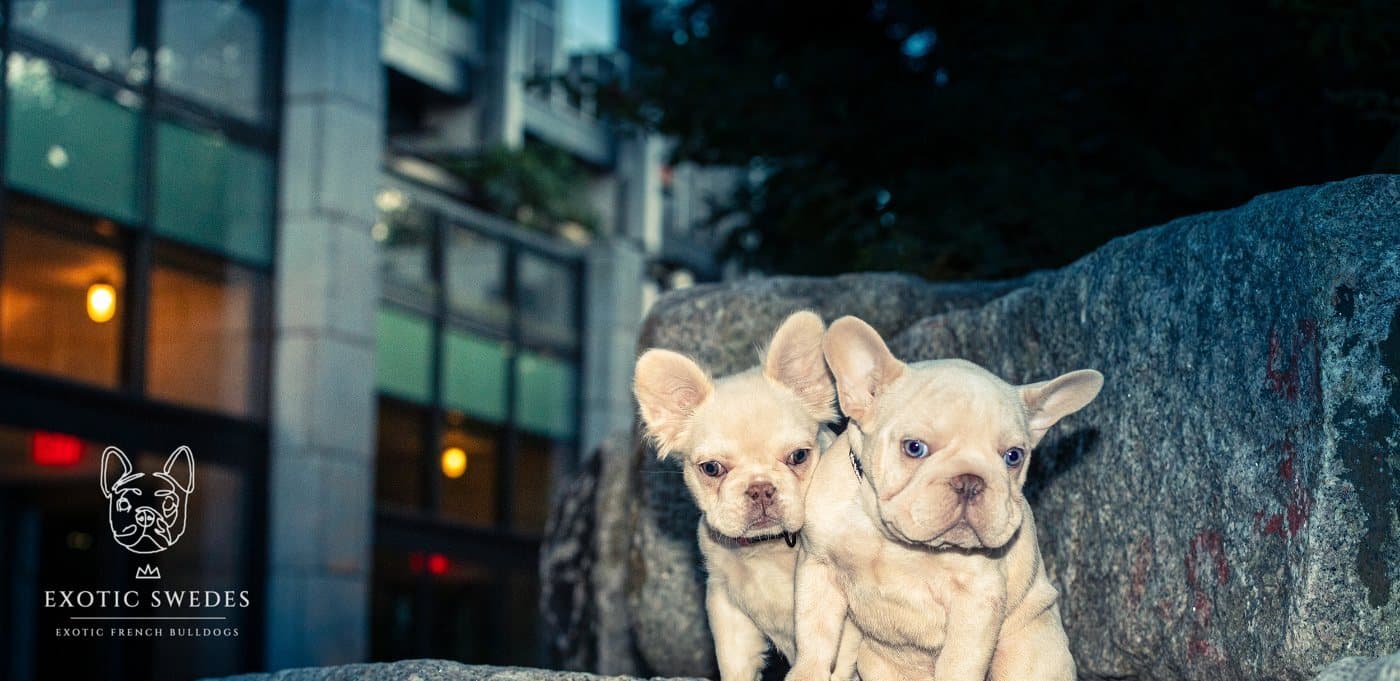
Why these four get confused
All four colours share the same foundation: the dilution gene (d/d) combined with chocolate (b/b and/or co/co). That shared base gives lilac and isabella their soft lavender and fawn tones, and it is also the hidden base under platinum and pink.
The difference is whether the dog is also cream (e/e). A cream dog hides its base colour in the coat. Lilac and isabella show their colour in the coat, while platinum and pink carry it only in the nose, eye rims and pads. You can read about all the loci in our colour guide.
Lilac
Lilac is dilution plus one chocolate variant: d/d with b/b or co/co.
- Coat: silvery lavender, from pale silver to warmer grey-lilac. Also seen with tan points or pied.
- Nose and pads: grey-lilac with a pinkish or brownish cast.
- Eyes: often light, from amber to grey-blue.
- As a puppy: noticeably lavender-grey from birth, slightly darker than isabella.
Isabella
Isabella, often called true isabella, combines dilution with both chocolate variants: d/d, b/b and co/co.
- Coat: the palest of the coloured dilutes, a light lavender-fawn with a warm, almost champagne cast.
- Nose and pads: light lilac-pink.
- Eyes: light, frequently pale amber or greenish.
- As a puppy: easy to confuse with lilac in photos. Only the report showing both b/b and co/co confirms it.
Platinum
Platinum is a cream dog (e/e) that carries lilac genetics underneath (d/d with b/b or co/co).
- Coat: pale cream to near white. The cream gene hides the lilac in the coat.
- Nose, eye rims and pads: lilac-grey, which is where the base colour shows.
- Eyes: light.
- As a puppy: a pale puppy with a lilac nose. A plain cream dog without dilution has a black nose instead.
Pink
Pink is a trade name, not a locus. It usually means a cream dog (e/e) on a lilac or, more often, isabella base, where the skin is so pale that it shows pinkish through the coat.
- Coat: very pale cream with a pink tone from the skin underneath, most visible on the ears, muzzle and belly.
- Nose, eye rims and pads: light pink to pinkish lilac.
- Eyes: light.
- As a puppy: pink skin is clearest in the first months and the coat often looks warmer as the dog matures.
Pink is not albinism. The dog still produces pigment, but at very low levels. Pale skin burns more easily, so pink dogs need shade and nose protection in strong sun.
Side by side
- Lilac: d/d + b/b or co/co, coloured coat, lilac nose.
- Isabella: d/d + b/b + co/co, palest coloured coat, light lilac-pink nose.
- Platinum: e/e on a lilac base, cream coat, lilac nose.
- Pink: e/e on a lilac or isabella base, cream coat with pink skin tone, pink nose.
In short: if the coat itself is lavender or fawn, think lilac or isabella. If the coat is cream and the colour only shows at the edges, think platinum or pink.
Why names differ between breeders and laboratories
Breeders sometimes call any lilac with both chocolate variants isabella, while others reserve the name for b/b dogs only. Some sell any pale cream dog as platinum or pink without the dilute base. Laboratories also present results differently: one may report co as a separate chocolate locus, another may group it differently.
That is why the name in an advert is only a starting point. Two dogs sold under the same name can have different genotypes, and that matters when you later want to know what your dog carries.
How to read the DNA report
Ask for the report for each parent and, where available, for the puppy. Check that it comes from a recognised laboratory and carries the dog's microchip number. Then look at these lines:
- D locus: d/d is needed for all four colours.
- B locus and co: b/b, co/co or both, which separates lilac from isabella.
- E locus: e/e means cream, which separates platinum and pink from lilac and isabella.
- M locus: should read m/m for these colours unless the dog is described as merle.
If a breeder cannot show a report, the colour name is a guess. Our colour overview lists the genotype we document for every colour, and the Health page explains how we test.
Frequently asked questions
Is a pink French Bulldog an albino?
No. A pink French Bulldog is a cream dog on a lilac or isabella base. It still produces pigment, only very little, which gives the pink skin tone.
What is the difference between platinum and pink?
Both are cream (e/e) over a dilute base. Platinum usually refers to a lilac base with a lilac nose, while pink is used for very pale dogs, often on an isabella base, where the pink skin shows.
How can I tell lilac from isabella?
Isabella is usually paler and warmer, but photos are unreliable. The DNA report decides: lilac has one chocolate variant, true isabella has both b/b and co/co.
Do these colours change as the puppy grows?
Yes, slightly. Pale coats often warm up and pink skin becomes less visible with age, while the nose and eye colour stay a good guide.